
Governance, done well, accelerates innovation. That sounds counterintuitive because “governance” often conjures gatekeeping and delay. But in complex systems, enabling constraints—clear aims, decision rights, evidence standards, and risk guardrails—reduce thrash. They let teams move faster with less politics, less ambiguity, and fewer expensive reworks.
Put simply:
Governed innovation = purposeful exploration + disciplined decisions + explicit guardrails.
- Purposeful exploration means we start from outcomes the organization actually cares about (growth, safety, quality, equity, cost-to-serve) and frame hypotheses against those aims.
- Disciplined decisions means we pre‑commit to how we’ll read the evidence and when we’ll stop, scale, or adapt.
- Explicit guardrails means privacy, security, ethics, accessibility, and brand risk are design inputs, not last‑minute vetoes.
Improvement science provides the learning loop (PDSA, practical measurement, driver diagrams). Governed innovation provides the direction (what we test and why), the portfolio (how many bets across time horizons), and the legitimacy (we are learning fast and being good stewards).
Continue reading “Governed Innovation: Turning Learning Loops into Enterprise Strategy”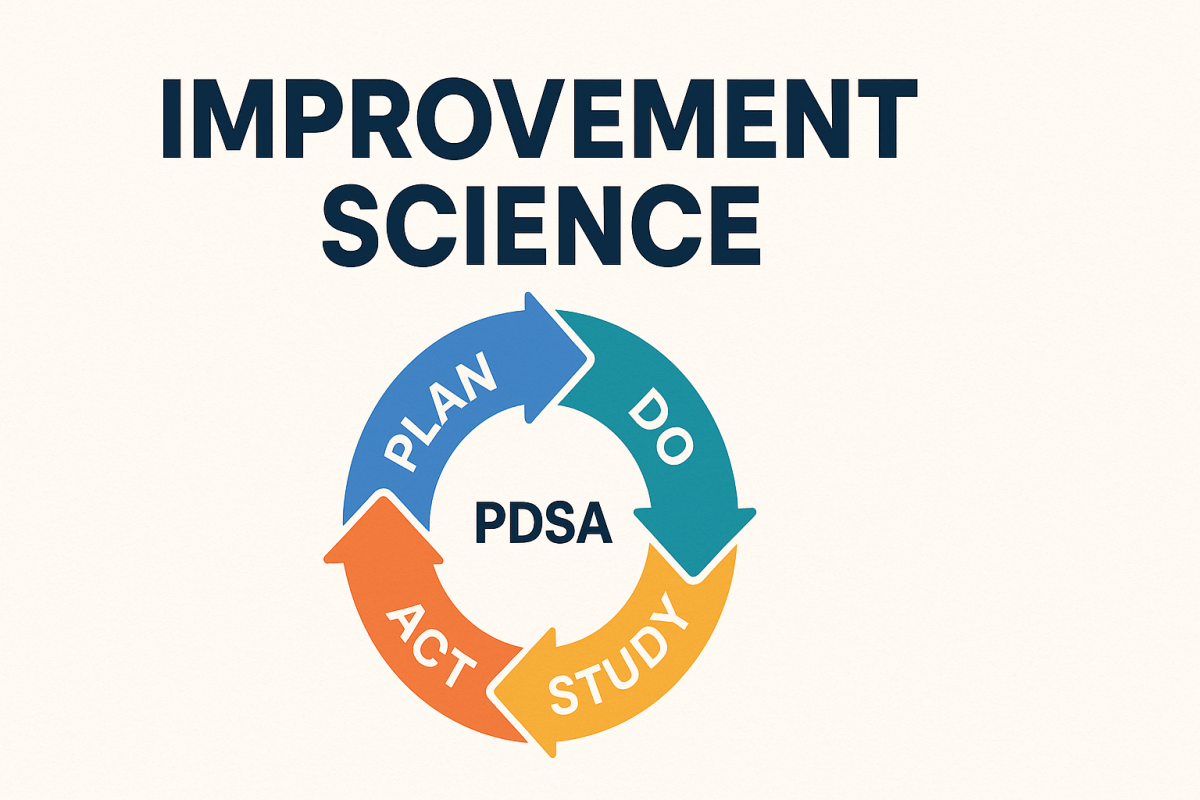
 EduDataSci - Educating the world about data and leadership