It’s always hard to sit down and fully absorb the information you get at a conference like Microsoft Ignite. You spend a week living in and around the tech world, just trying to drink in everything and interact with as many people as possible. I’m still doing more than a little digesting about what all of these announcements last week have meant, but I’m excited about quite a few of them, especially on the data platform side.
The new shape of the Microsoft data platform
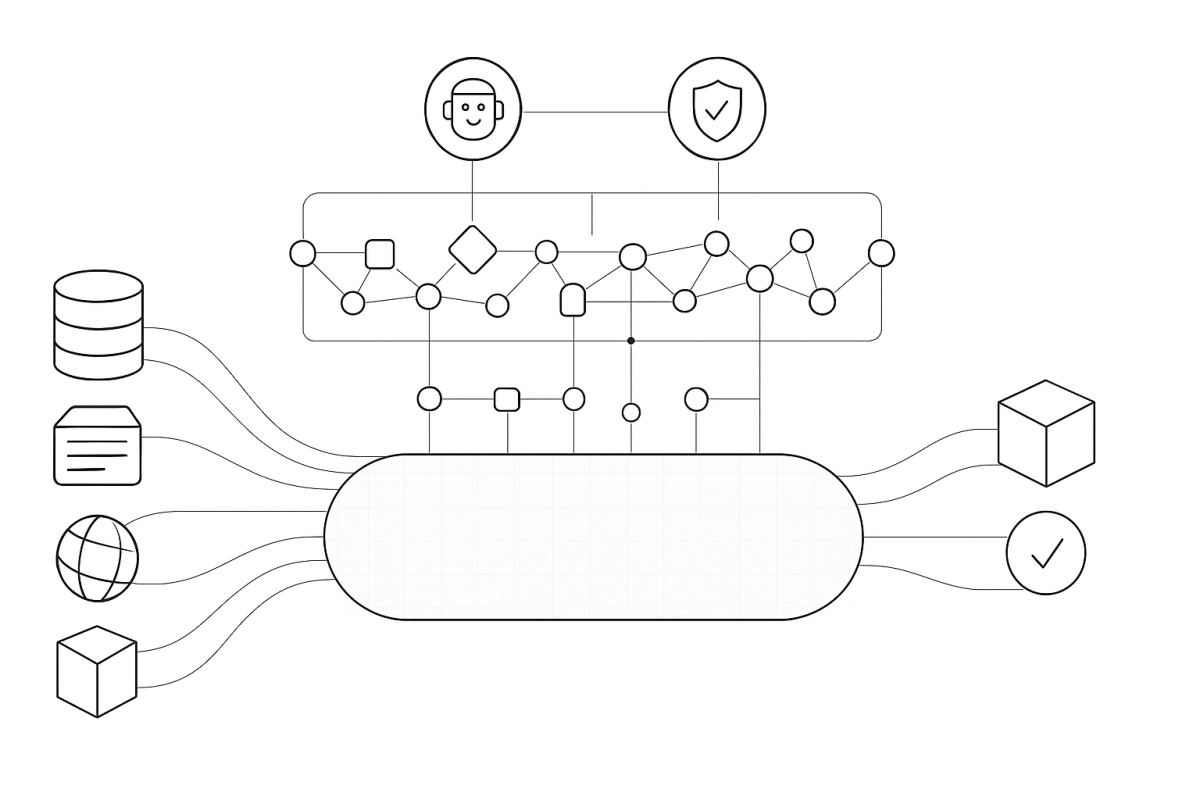
The Ignite 2025 data story revolves around four structural shifts:
- Operational and analytic data move closer together
Fabric Databases (SQL Database in Fabric and Cosmos DB in Fabric) and broad mirroring support make it much easier to expose operational data into OneLake without building and running large custom ETL estates. - Semantics become first‑class platform assets
Fabric IQ extends the semantic ideas familiar from Power BI into a platform‑wide “intelligence layer” used by Fabric experiences, agents, and Copilot scenarios. - Purview becomes explicitly AI‑aware
New DSPM capabilities and agent‑focused controls turn Purview into a data security posture plane for both users and agents, across Fabric, Foundry, and Microsoft 365. - Databases are positioned as AI‑centric and Fabric‑aware by default
SQL Server 2025, Azure DocumentDB, Azure HorizonDB, and Fabric Databases are presented as a coherent lineup designed to support AI, vector search, and tight integration with OneLake.
The sections that follow unpack these moves and what they imply for architecture and governance.
Fabric Databases and mirroring: towards zero unmanaged copy
The most immediate shift for many data teams is the combination of Fabric Databases and database mirroring into OneLake.
Fabric Databases (SQL + Cosmos) as first‑class Fabric workloads
Fabric Databases bring SQL Database in Fabric and Cosmos DB in Fabric into the same SaaS plane as warehouses, lakehouses, and other Fabric workloads. Key ideas:
- Databases are provisioned and operated as Fabric items, using Fabric capacity instead of separate server constructs.
- They align with OneLake, Fabric security, and Fabric observability, reducing the number of control planes to manage.
- They are described as AI‑ready, accommodating patterns such as embeddings, RAG‑style queries, and real‑time analytics.
For data leaders, this means operational and analytic workloads can increasingly live in the same governed platform instead of in loosely connected silos.
Mirroring as a platform capability, not an exception
Database mirroring into OneLake moves from preview territory into a central architectural element. Supported sources include:
- SQL Server (2016–2025) and Azure SQL
- Azure Database for PostgreSQL
- Azure Cosmos DB
- Additional platforms, including Snowflake and SAP Business Data Cloud, via OneLake‑centric integrations
Mirroring projects data into OneLake in Delta format for use by Fabric engines without requiring bespoke ingest pipelines. The result is a design where:
- Operational systems publish their state once, and Fabric projects that state into analytic forms.
- More of the estate can be shaped around zero unmanaged copy: data is not repeatedly cloned into independent, untracked silos just to serve each engine.
This does not eliminate the need for modeled layers, but it significantly reduces the amount of integration logic that must be owned and operated by individual teams.
Fabric IQ: semantics as infrastructure
Fabric IQ is the other major structural change. It elevates the semantic layer from a reporting artifact to infrastructure for analytics, applications, and agents.
Key aspects emphasized in the Fabric IQ material:
- Entity‑centric semantics
Business concepts such as customers, orders, products, and assets are modeled as entities and relationships, not just tables and joins. - One semantic layer, many consumers
The same semantics are intended to support Fabric workloads, Microsoft 365 Copilot, other agents, and potentially external applications. - Integration with AI and agents
IQ is positioned as part of a broader “universal context” alongside Work IQ and Foundry IQ: agents use it to understand what data means and how it connects to user actions and business processes.
The implications for data design are significant:
- Enterprise semantics become the shared surface for BI, AI, and operational decision support, rather than being duplicated per tool.
- Investing in robust models—dimensions, entities, policies—has clearer downstream benefits: agents and AI experiences can leverage that structure without ad‑hoc integrations.
For teams already standardizing on semantic models, Fabric IQ gives that work a more direct connection to AI and agent scenarios.
Purview: DSPM, agents, and AI‑aware governance
The Purview announcements at Ignite 2025 reposition it as an AI‑aware, estate‑wide data security posture management solution, not just a catalog plus sensitivity labels.
Integrated DSPM with AI‑specific signals
The new DSPM experience brings together classic data security insights with AI‑oriented risk. Core elements include:
- Outcome‑based workflows – security objectives (for example, “reduce oversharing of sensitive data”) tied to metrics, findings, and recommended actions.
- A single, integrated view of data risks across services and clouds, rather than fragmented reports.
- Visibility into AI‑related data use, including where sensitive data appears in prompts, responses, or agent actions.
This aligns with how many organizations now think about governance: not only “what’s in the tables,” but also “how that data is used by AI systems.”
Purview for agents and Agent 365
Purview’s role extends into agent observability and control:
- An inventory of agents from Microsoft platforms and compatible third‑party stacks, along with their data access characteristics and posture.
- Extension of Information Protection, DLP, Insider Risk, Communication Compliance, Data Lifecycle Management, Audit, and eDiscovery to agent activity.
- SDK‑based integrations so that custom agents and frameworks can respect Purview classification and DLP from the start.
Alongside this, the Agent 365 story positions agents as first‑class entities in the security and compliance landscape, rather than opaque black boxes.
DLP for Copilot and consumer AI apps
Purview DLP is broadened to cover:
- Interactions with Microsoft 365 Copilot, including protective behavior when prompts or grounding data include sensitive information.
- A large set of consumer AI applications (via browser and network controls), limiting exfiltration paths for sensitive data into unmanaged tools.
- On‑device AI features in Windows, with appropriate DLP coverage.
Taken together, Purview becomes the central governance layer for #MicrosoftPurview customers operating in a world where both people and agents are constantly invoking AI against organizational data.
Databases for AI‑native workloads
The database announcements at Ignite position the core engines for an AI‑intensive, Fabric‑connected world.
SQL Server 2025 GA
SQL Server 2025 is presented as an AI‑ready database that remains consistent from on‑premises to Azure. Highlights include:
- Built‑in capabilities for invoking AI models from T‑SQL, enabling scenarios where results from models are integrated into relational processing.
- Enhanced JSON, REST, and change event support to better align with modern application patterns.
- Close integration with Fabric via mirroring into OneLake, enabling near real‑time analytics and reporting on operational data without a separate ETL stack.
This offers a path where existing SQL estates can participate in a Microsoft Fabric‑centric data platform without full re‑platforming.
Azure DocumentDB (GA)
Azure DocumentDB is introduced as an open, Mongo‑compatible document database managed by Azure and governed as an open standard through the Linux Foundation. Key attributes:
- Compatibility with MongoDB application patterns.
- Support for vector and hybrid search, suitable for AI and retrieval scenarios.
- Independent scaling of compute and storage, enterprise security features, and long‑retention backups.
DocumentDB is positioned as a natural fit for applications that need both flexible document storage and AI‑adjacent capabilities, while still being able to integrate into Fabric and OneLake patterns.
Azure HorizonDB for PostgreSQL (preview)
Azure HorizonDB enters preview as a PostgreSQL‑compatible database optimized for high‑throughput transactional and AI workloads:
- Scale‑out compute and storage designed for large, concurrent workloads.
- Vector indexing capabilities (including DiskANN‑style approaches) aimed at high‑performance embedding search.
- Integration paths into Foundry, Fabric, and development tools.
This fills out the universe of engines for teams standardizing on Postgres but needing native vector and AI support with tight integration to Microsoft’s broader AI stack.
OneLake, Real-Time Intelligence, and Data Factory
The rest of the Ignite 2025 data story is about the surrounding infrastructure that turns databases, semantics, and governance into a usable platform.
OneLake and platform interoperability
OneLake continues to be framed as the single logical data lake behind Fabric. Ignite adds:
- More mirrored and shortcut‑based sources, including additional Microsoft databases and partner platforms.
- Stronger interoperability with Snowflake, Databricks, and SAP Business Data Cloud, designed for zero unmanaged copy: data is stored once but can be computed against by multiple engines without repeated unmanaged replication.
- Enhanced capacity and security tooling for OneLake and Fabric, intended to help administrators manage cost, performance, and governance at scale.
The direction is clear: organizations are encouraged to treat OneLake as the backbone for analytic data, even in multi‑engine environments.
Real-Time Intelligence
Fabric’s Real-Time Intelligence layer continues to evolve from streaming analytics into an operational decision‑support fabric:
- Closer integration with warehouse and lakehouse endpoints, connecting telemetry and events directly into modeled layers.
- New operations agents and rule‑driven capabilities that allow streaming data to trigger alerts, actions, or workflows grounded in domain logic.
This reduces the gap between “real‑time monitoring” and “modeled data products,” allowing more consistent use of the same entities, policies, and governance across batch and streaming.
Data Factory in Fabric
Data Factory is explicitly integrated into Fabric as the main data‑integration experience inside the platform:
- Pipeline and mapping data flow features are presented as part of the Fabric story rather than as a separate service.
- The emphasis is on using Data Factory where transformation and orchestration are truly needed, while relying on mirroring and OneLake shortcuts for cases where moving or transforming data is unnecessary.
Combined with Materialized Lake Views and mirroring, this supports a pattern where integration logic is applied carefully, and unmanaged copying of data is minimized.
What this means for roadmaps
Pulled together, Ignite 2025 suggests several practical shifts for data leaders working in the Microsoft ecosystem:
- Reevaluate integration strategy
Where mirroring and OneLake integrations are available, prefer them over custom ETL. Use Data Factory for the residual cases where transformations are essential. Aim for zero unmanaged copy as a guiding principle. - Elevate semantic modeling
Treat Fabric IQ and semantic models as shared infrastructure for dashboards, applications, and agents—not just a BI concern. Align modeling work with the domains that agents and Copilot experiences need to reason about. - Modernize governance toward AI
Adopt Purview’s integrated DSPM and agent capabilities as the default governance plane, so both people and agents operate under consistent rules, monitoring, and policy enforcement. - Align database choices with AI and Fabric
When introducing or refreshing databases, consider DocumentDB, HorizonDB, SQL Server 2025, and Fabric Databases primarily in terms of:- How they plug into OneLake and Fabric
- How they support AI workloads (vector search, embeddings, RAG)
- How they fit into Purview‑governed patterns
If Ignite 2023 was about introducing Microsoft Fabric, Ignite 2025 is about closing the loop: operational databases, OneLake, semantics, governance, and agents now form a more coherent platform that is easier to reason about and govern end‑to‑end.

 EduDataSci - Educating the world about data and leadership