Every organization has white space: important work that lives between teams and across systems, is almost always evidence‑bearing, and—despite its value—rarely reaches the top of the backlog. In software engineering, that’s the unglamorous backbone of quality: keeping documentation and runbooks current, sustaining full test coverage (beyond unit tests), and validating against standards (security, accessibility, SBOM/licensing). In manufacturing, it shows up as traceability and shipment evidence (SPC, PPAP/FAI, calibration certificates) and keeping control plans/PFMEA in sync with engineering changes. In education, it appears as standards alignment of curricula, accessibility/privacy checks across LMS content, and intervention follow‑through after assessments. These jobs cross many systems, require judgment, must leave an audit trail, and are perpetually “important but not urgent”—perfect territory for delegating to digital workers: software teammates that live in the seams, move work to done, and attach the receipts as they go.
“To effectively delegate these tasks they need knowledge, access, and some intangibles.” (Nathan Lasnoski)
A digital worker earns real delegation only when three things are in place: knowledge (trusted sources, rubrics, examples), access (the right tools and permissions under guardrails), and the intangibles of a good teammate (when to act vs. ask, tone, and norms). With that foundation, a coaching worker can also serve as worker‑as‑judge—applying explicit rubrics, pulling evidence across systems, returning a pass/fail or “needs work” with a brief rationale, and providing an easy appeal to a human. The payoff is fast, fair, actionable feedback that feels like a senior reviewer on call 24/7—something frontline teams welcome.
What a digital worker is (and why people actually want them)
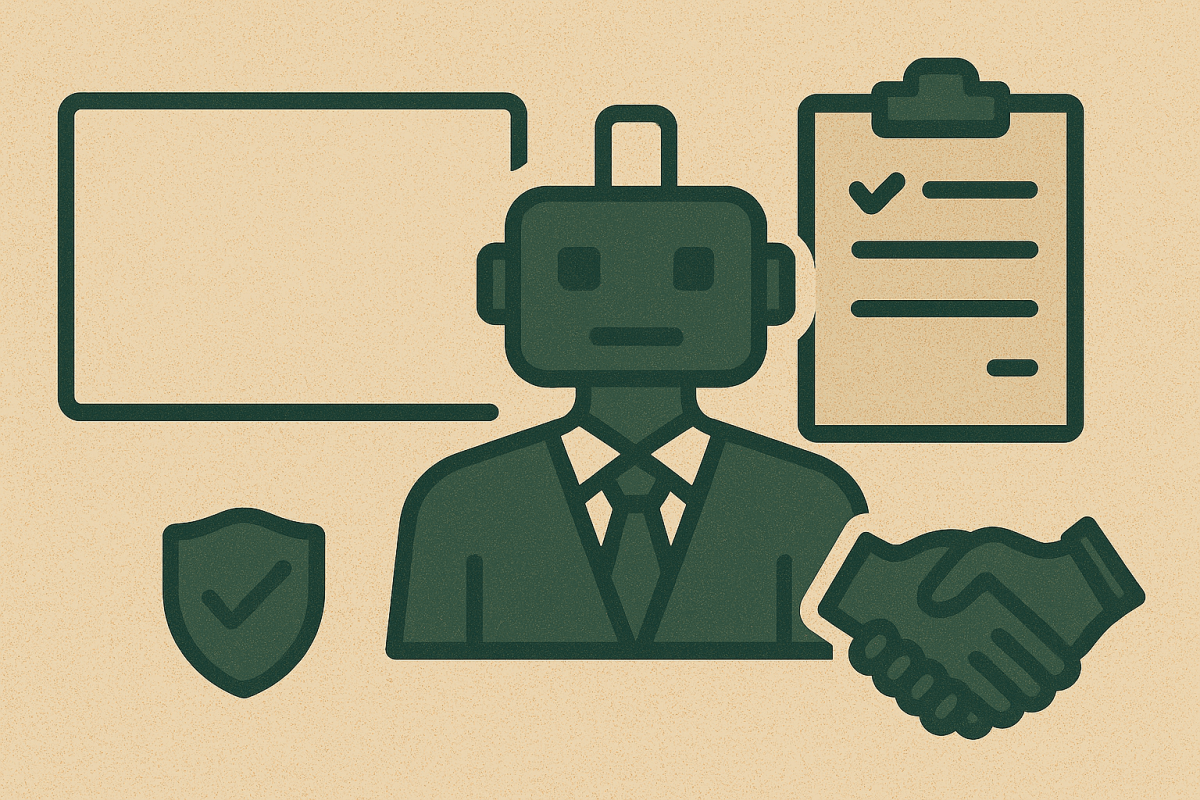
A digital worker is a role you can “hire” to own a repeatable outcome with SLAs, guardrails, and telemetry. It is not just GenAI or a chatbot. It’s a composed capability that blends workflows/RPA (deterministic steps), traditional ML(classification, scoring, detection), and AI (reasoning, planning, language)—often with agentic behaviors (plan → act → observe → adapt). Defined as roles—not tools—digital workers are easy for line employees to embrace because they reduce context switching, progress the work that never quite gets done, and leave clear artifacts instead of brittle alerts.
Coaching includes “worker as judge”—and that’s a feature, not a bug
Coaching isn’t only hints and how‑tos. A powerful pattern is coach‑as‑judge: evaluate work and explain the verdict.
- Quality rater: scores analysis for clarity/completeness and suggests targeted fixes.
- Standards adjudicator: checks a PR, document, or course page against a policy and rules pass/fail—with rationale and an appeal route.
- Coverage examiner: flags risky, uncovered paths and proposes minimal scaffolds to raise the floor.
This combination sets expectations, reduces rework, and builds confidence because people see exactly whysomething failed and how to fix it.
A short, practical role catalog (use examples to clarify scope)
- Productive workers (close loops): Intake & Triage, Data Hygiene, Insight Packager. They move tasks across systems to “done,” with evidence attached.
- Coaching workers (raise the floor): Analyst Coach, Presenter Coach, Call‑assist—plus Coach‑as‑Judge variants that score, explain, and improve.
- Compliance workers (make safety the default): Standards/Accessibility Reviewer, Control‑Plan Librarian, Model‑Risk Clerk. Evidence is captured during the work, not at audit time.
- Sentinels, Curators, Brokers, Stewards: watchers, librarians, coordinators, and lifecycle shepherds that keep processes healthy and knowledge fresh.
How digital workers change the game (for humans first)
- They make the important work un‑ignorable. Schedules, events, and queues ensure white‑space tasks are consistently picked up and progressed.
- They raise the baseline. Templates, checklists, and policies are applied every time—reducing variance and rework.
- They compress cycle time. Workers fetch context, stitch systems, and nudge the right owners so humans stay in flow.
- They are transparent. Every action is logged; every decision has rationale and artifacts.
- They learn with you. Like new hires, they improve from feedback and evolve with the process.
Hiring one (with an expert vendor): the role‑charter model
Most organizations “hire” a digital worker by partnering with an expert vendor that assembles the skills (APIs, workflows, retrieval, models, prompts) and operates the worker under your guardrails.
- Role Charter (you + vendor): mission, scope, inputs/outputs, SLAs, policies, escalation, KPIs.
- Governed Orchestration (vendor): identity/entitlements, scheduling, tool routing, audit trails, telemetry.
- Pilot → Operate → Expand (joint): start in white space; measure cycle time, right‑first‑time, and evidence coverage; then scale to adjacent roles.
This keeps the focus on staffing outcomes you’ve never consistently owned, not buying one more bot.
What to measure so value compounds
- White‑Space Recovery: % of previously “no owner” work now completed.
- Cycle Time to Outcome: Trigger → artifact delivered (with approvals).
- Right‑First‑Time: Rework rate and exception aging.
- Coverage: % of work with attached evidence (docs, tests, control proofs).
- Assist/Adoption: Coaching suggestions accepted and their impact.
- Cost per Outcome: People + compute, normalized by volume/complexity.
Closing thought
Start where people feel the drag—docs/tests/standards in software, traceability/control‑plans in manufacturing, standards/accessibility/interventions in education. Hire a digital worker into that white space (with a capable partner), and you’ll convert “we never got to it” into “it’s just done,” while making the work more humane. And as Josh Scriven reminds leaders, treat this like adding a real department: hire thoughtfully, set guardrails, measure impact, and celebrate the wins.

 EduDataSci - Educating the world about data and leadership